Virginia Home Grown
Meadows
Season 26 Episode 3 | 56m 46sVideo has Closed Captions
Discover why meadows are biodiversity powerhouses!
Visit a mini meadow in Virginia Beach and a large-scale planting in Barboursville to learn how native grasses and wildflowers provide habitat and food for pollinators, improve soil health, and reduce water runoff. Engage with us or watch full episodes at Facebook.com/VirginiaHomeGrown and vpm.org/vhg. VHG 2603 May 2026.
Problems playing video? | Closed Captioning Feedback
Problems playing video? | Closed Captioning Feedback
Virginia Home Grown is a local public television program presented by VPM
Virginia Home Grown
Meadows
Season 26 Episode 3 | 56m 46sVideo has Closed Captions
Visit a mini meadow in Virginia Beach and a large-scale planting in Barboursville to learn how native grasses and wildflowers provide habitat and food for pollinators, improve soil health, and reduce water runoff. Engage with us or watch full episodes at Facebook.com/VirginiaHomeGrown and vpm.org/vhg. VHG 2603 May 2026.
Problems playing video? | Closed Captioning Feedback
How to Watch Virginia Home Grown
Virginia Home Grown is available to stream on pbs.org and the free PBS App, available on iPhone, Apple TV, Android TV, Android smartphones, Amazon Fire TV, Amazon Fire Tablet, Roku, Samsung Smart TV, LG TV, and Vizio.
Providing Support for PBS.org
Learn Moreabout PBS online sponsorship(soft lively guitar music) >>One of the species that were more difficult to introduce was milkweed, but now it's popping up everywhere.
It took six, seven years, so we're really exciting to see how it's developing and satisfying to know that it's so active and so productive.
>>The meadow doesn't have to be this vast expanse.
It can be in anybody's yard.
It can be a small portion of your yard.
It can fit in the shade.
It can grow in an area where you otherwise wouldn't be able to grow much.
(bird chirping) >>Production funding for "Virginia Home Grown" is made possible by Strange's Florists, Greenhouses, and Garden Centers.
Serving Richmond for over 90 years with two florist shops, two greenhouses, and a garden center.
Located throughout the metro Richmond area.
Strange's, every bloomin' time.
And by Sally R. Youngs in honor of the Grateful Deadheaders Resident Interest Group and by... (birds chirping) (gentle upbeat music) (gentle upbeat music continues) (gentle upbeat music continues) >>Welcome to "Virginia Home Grown."
With drought impacting the landscape and a strong El Nino due to emerge, we are in for quite a unique growing season.
Today we're talking about meadows.
Whether expansive or compact, they benefit the ecosystem and are easy to maintain.
I enjoy watching the succession of blooms, and here's a flower from my meadow.
It's called Aaron's Rod.
It's a beautiful yellow, and it's botanical name is Thermopsis villosa.
You know, we always enjoy hearing from you, so remember to send in your questions at vpm.org/vhg.
A little later we'll visit a shaded mini meadow in Virginia Beach that the neighbors enjoy as well as the pollinators and the birds.
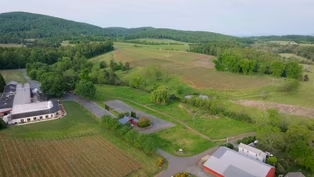
But first, Shana Williams visited Barboursville Vineyards to talk with Luca Paschina about all the benefits he has seen at the estate since converting a pasture to a meadow in 2022.
Let's get going.
(tractor humming) >>I had this desire to convert what used to be a pasture into a meadow because it does enrich greatly the biodiversity of plants, especially of insects and birds and butterflies, the pollinator.
So it's something that I've been doing throughout my 35 years on the estate, is to maintain a very natural environment.
We have wetlands.
We have hay fields.
We have pasture.
We have woodland.
This is an even greater impact that we are doing in the environment by creating all this very intense biodiversity in these four acres.
It's amazing how much is going on here when it is in full bloom, and even through the winter when the birds eat the seeds.
(birds chirping) >>We wanted a mix of grasses and plants that would be native that might have been here to some degree when Governor Barbour actually operated here at the estate.
And so we selected four native grasses, and then we added to that a mix of about 15 plant species, annuals, biennials, and perennials.
So we've got stuff growing at different levels at different rates throughout the meadow.
What we're trying to do with the meadow is to demonstrate that we can create a habitat for birds, animals, and pollinators that's going to be good generally for the whole ecology out here.
And it's consistent with the whole idea of art and science combining to produce good wines.
You'll see, first of all, a variety of bird species out here.
Most of them are common and native to what you might see about anywhere, but the bluebird boxes were a special edition.
We have seven of them out here, and we space them out so that the bluebirds, when they nest, aren't competing with one another.
We see robins.
We see all manner of thrushes and chickadees and wrens out here.
We're particularly interested in ground-nesting birds.
So we do see a lot of flickers out here.
We'd like to see eastern meadowlark because that's a threatened species here in Virginia.
And ultimately, I guess my dream would be to see a regeneration of bobwhite quail out here.
>>One of the things I wanted to know is, across there are your vineyards, but what do you plan on doing expansion-wise?
>>Across the creek, we have a plan to introduce more of a meadow, perhaps a different mix.
Maybe we go more with a mix of grasses, more grasses and less forbs and all natural native grasses like bluestem or the Virginia rye to really enrich more the biodiversity.
One element also very important to understand is that grapes, they don't need pollinators, by the way.
>>Yes.
>>But there are certain insects, there are some that are non-native that can be damaging to the vineyard.
So increasing the population of natural native insects, it puts them in competition and keeps them in balance because trees, they're all fighting for light in a forest.
Insects are also fighting among themself.
>>Just increasing the ladybugs out here will eat a lot of that larva.
>>Yes.
>>Share with me some of the plants that we have around.
>>Yes, we have several native grasses.
>>Yes, we have several native grasses.
We have different other plants like bee balm that everybody knows called wild bergamot.
We have the coreopsis, which is one of the first to bloom with a beautiful yellow flower.
>>I imagine it's gorgeous.
>>Black-eyed Susan.
>>Yes.
>>And then we have Echinacea, which is also- >>Purple coneflower.
>>Exactly.
>>Yeah.
>>So, there are many things.
>>But I also saw a lot of milkweed around.
Tell me about that.
>>A lot of milkweed.
Milkweed was very difficult to introduce.
So what we did, they create some plugs in a greenhouse, and we transplant them.
And now after six, seven years, it's popping everywhere.
At first, we thought almost we would have failed, but then this plant came to grow, and now they're spreading.
And so it's gonna have a lot of milkweed, and it's increasing year after year.
>>I noticed that amongst all the plants, there's a number of invasive species.
>>Yeah.
>>How are you managing that?
>>We're managing to monitor especially the one most invasive, and the worst we have to deal with is vetch, which crawls and really chokes everything.
So we go in certain spots, and manually we just remove it to avoid taking over the whole project.
>>Are a lot of the visitors allowed to pick some of the native plants and seeds that are here?
>>Absolutely.
They are welcome to collect seeds.
The right time of year, it's late fall, when the plants go dormant, and the seeds are drying up, and the pods are easy to get rubbed and the seeds removed.
It happens frequently.
And also one of the success stories of having the meadow is that we inspire somebody locally that bought a farm to put a 20-acre meadow.
And they ask a lot of question, how it's done and so on, so.
>>Well, that's wonderful to know that what you created can extend beyond you.
>>Yes.
>>I really wanna know, what advice, what lessons did you learn from installing this meadow?
What is one of those key things that you learned?
>>For this size, it's advisable to have somebody that can give you the right kind of information.
In a small scale, of course, it's easier to do.
But the preparation of the soil is very, very important.
and then having the seed dispersed the right way, not too deep because it will not germinate.
So there are some simple techniques that if they are followed, it's gonna be successful, the project.
>>Luca, your vineyard has been here for 50 years.
What does it take to be successful?
>>Well, for us was, of course, had to produce a great quality wine.
And we were able to do that through the experience we collected through the many years to work with the soil and the climate.
And then we realized that we had to create an experience on the estate for people to come and find great hospitality.
We have a great restaurant.
We have a few rooms.
People can spend the weekends.
But then you have to also have a very pristine environment.
So in order to maintain these open spaces, vital we plant the vineyard, and we sell the wine.
That gives us energy to continue to invest and maintain this as an open space.
>>How did that cold weather affect the vineyard?
>>Yeah, it was a very impactful frost throughout Virginia.
Lower location of vineyards, lower areas that were colder, we went down to 24 degrees, and upper air instead, they stayed about 30.
So in aggregate, we lost about 30% of our crop.
But '22 vintage, '23, '24, '25, we had a full crop and great quality.
So, farming, sometime it gives you a lot, and sometimes it takes away.
And we accept that.
Otherwise I wouldn't be a farmer.
(chuckleS) >>I understand.
This is beautiful, and I can't wait to come back up here and to see it in full bloom.
Thank you for sharing this wonderful vineyard with us.
>>Thank you, Shana, for visiting.
I had a great time.
>>As Luca mentioned, preparation makes the meadow, and when it's done right, the meadow thrives, and wildlife is abundant.
And speaking of wildlife, Shana, you've brought us some things here to talk about how to protect the wildlife.
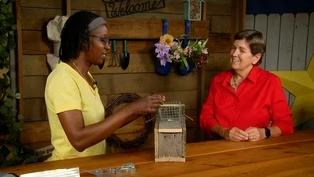
>>Yeah, so when I was in their meadow, it was certain things that I really enjoyed seeing, but one of 'em was how they made their birdhouse.
So I see birds and the eggs all over the ground and stuff, and I gotta figure out a way to help them out.
So my neighbor made this birdhouse, and it's like the typical one.
It's squared.
It has nails in it, but you can't really access, and that's one of the things that... I'm gonna pass that to you.
That's one of the things that I liked about the one that I found and saw at the meadow.
So I like the fact that theirs was, it was stressed.
>>It's stressed.
>>It looks like wood, but I like that you had an access here.
So what I've actually done is just used the nail because, hey, I'm about saving money.
So this is basically just pallet boards, but turning that allowed me to open it and close it.
>>You could see what's inside.
>>Exactly.
>>And clean it.
>>And clean it out.
But it also has a vent here.
But so as I was talking about earlier, I wanna be able to create defenses to protect this.
So, first of all, sometimes you find bees and wasps that get inside, so one of the first defenses is I want airflow.
But I'm gonna put this mesh here, and I'm gonna anchor it into place.
And then I just had some scrap metal around.
>>Right.
>>So this is a nose guard, but before I put that, hey, I always have to deal with squirrels.
>>Squirrels, yes.
>>So just all I simply did was take a piece of gutter.
(both laugh) >>Yes, I love it.
>>Made a hole in it, flattened it out a little bit.
Now, I put that here.
I can glue that into place or nail it into place.
And then now I have this guard here, and one thing about this guard is, it was just scrap metal, as I said before, and I just clipped it and bent it into place.
But I can place that here.
So the little metal flat stops the squirrels from enlarging the hole.
>>Right.
>>But this stops larger birds.
Say, for instance, my neighbor was telling me about some crows that were coming and stealing the eggs.
So I'm like, "You know what, this will stop them."
They'll have a little perch.
Mom can still go in there and feed her young, but at the same time, larger birds can't just reach in there and then steal.
And these sharp edges here will also help a little bit of that too.
>>Yeah, add a little bit more defense to it.
>>Exactly.
So that's that first, some of the basic lines of defense.
And then we have this other one here.
I'm gonna turn it the back way here.
So a lot of times, I'll just see some of the birdhouses mounted.
And one of the things that I was like, "Okay, why mount it, and why do you have a skirt on it?
What is that about?"
>>Right, yes.
I love how you call it a skirt.
>>I needed to know what that stuff is.
It's a baffle.
>>A baffle.
>>It's a baffle.
I know that now.
(both laugh) So, anyway, I have this pole here.
A lot of times, you can buy a mounting, and then this is plumbing pipe, and just attach it.
This costs a lot of money, so, again, I'm about saving money.
>>You had some of that laying around, I am sure.
(laughs) >>Exactly.
So what I will simply do is, in order to mount this, I have some basically a half-inch pipe laying around the yard.
Got some of these clamps.
And I'm pretty much, I'm just gonna do this so you can see it.
But I would attach that like so and anchor this.
And this, of course, is a long post, and this keeps it up off of the ground.
I won't put it directly under trees so the squirrels can jump onto it.
So I'll do some of those things.
But besides that, I'm gonna slide this over just a little bit because I created... This is what we call a baffle or funnel.
>>Yep.
>>And you pretty much put it on the pole, but you see this clip right here?
>>Yeah.
>>That helps hold either this metal piece in place, and I can attach it there with some metal tape, or I can just simply put this here- >>Right.
>>Slide it on, then my skirt 'cause you see that piece right there on the bottom.
So I'm gonna slide this in place if I can find it.
(Peggy laughs) Hey, Peggy, I might have to have you find that for me.
>>You got it?
>>There we go.
And as it stands up... >>Bingo.
>>And of course, the birdhouse is attached.
>>Right.
>>This moves around, stops snakes from just curling around.
>>'Cause it's too slippery.
>>Stops squirrels.
Exactly.
>>Yep.
>>Yeah, so, that's one of the things.
I just looked at all of these different devices and said to myself, "I have all this at home.
What do I need?"
(taps) Pair of gloves.
>>Absolutely.
>>Some snips- >>Save your hands.
>>Couple screws, some old wood.
>>Shana, this is all great information because you've shown us how we can take a birdhouse, which we can buy in many places, but add defenses now to protect the young that are within so there's just no more eggs on the ground.
>>Exactly.
(both laugh) >>And now we're going to go back to Barboursville to answer some questions you've sent us about meadows.
>>The first question I want to start with is, what is the process to starting a meadow?
>>Well, the first process, the first step in the process, is to look at the area that you're considering.
Are you in full sun, are you in partial shade?
What is it you're trying to accomplish, and where are you trying to do it?
The next thing is to take a look at what's already in the ground there.
In our case here, for example, we had a former pasture area that was just overseeded with fescue, and we had to remove that fescue.
So, in a smaller residential plot, chances are you can do that with regular garden tools.
Maybe you rent a rototiller, you till things up, disturb the soil really well, and then you rake it out and then you're ready to seed.
>>And if they need to, they can also cover it up with a tarp and make sure everything dies back.
>>Yes, you can do that.
And the important thing here is also one of timing.
If you're going to start a meadow and you're thinking about planting in the spring, then the following winter or fall is your time to disturb that soil and make it ready for planting.
That way you can see if you get cold-weather seed bank repopulating that area, you can disturb it again and get rid of it.
It takes a while to get rid of all the seed bank, and you won't eliminate it entirely.
But if you get rid of most of it, and then you seed with the seed you want in the meadow, it will take over.
>>Okay.
That's good to know, especially if someone who wants to get started with their own little small meadow in their yard.
Now, we have a viewer's question here.
Brad wanted to know, in addition to bees and birds, what other wildlife would you be seeing in a new habitat?
>>Depending on where it is, you could well see some reptile life.
You know, we talked earlier about a black snake out here.
>>Yeah, it was interesting.
>>Which are really good and healthy reptiles to have, particularly if you've got field mice or other small predators.
So, you shouldn't be scared about that.
When you create a natural habitat, you're gonna draw in all the animals that are part of that habitat, which is what you're trying to do actually.
>>I mean, and then bee-wise, that you're gonna have a host of bees and insects, as well as a number of different types of birds and butterflies.
>>Correct.
You're going to see in this area, for example, probably not less than 8 to 10 or 12 different butterfly species.
>>Okay.
>>And the same would be true for bees and wasps.
It'll take a while to identify those because most of us don't typically see all of those species every day.
>>Yes.
So, Karen wanted to know, when the meadow was being established did you mostly put in seeds or plugs?
>>Mostly seeds, but we did use plugs that we actually cultivated in our own greenhouse from seed for the milkweed, the common milkweed, that you see all around the meadow now.
>>Now, you've had this meadow for over eight years now.
>>Correct.
>>Did you ever have to reseed it?
>>Yes, we reseeded two years ago.
We reseeded for two reasons.
First, because we noticed a decline in the annuals population, particularly the Black-Eyed Susans.
And secondly, because we wanted to extend the blooming season.
So, we added a couple of other species of asters that are native to this area.
>>Okay, good.
All right, now Amanda wanted to know, do you have trouble with birds depositing poison ivy seeds in the meadow?
>>No, generally speaking, birds go where birds are going to go, and they deposit all kinds of things into the meadow.
So, we see some poison ivy, we see some pokeweed.
We see some other things that normally wouldn't, we wouldn't want here.
But I'll say again that they are not overpopulating the meadow.
The meadow is now pretty well established with the species that we intended to be here.
We haven't felt the need to remove anything that we consider to be invasive.
>>And thank you for answering that because that was the part two, of how you would control it if you did have to remove some things.
>>Well, we're not gonna use herbicides, or anything like that at this point.
We'll simply go in and hand remove anything that needs to be removed.
>>Okay.
And I saw some blue indigo.
Did you guys plant that, or was that something that just planted itself over time through the birds?
>>So, two things about that.
First of all, blue indigo, false indigo, are easily confused.
We did not plant that.
We did plant blue lobelia, which has a very, it has similarity.
So, you have to look very carefully at the plant to determine one from the other.
But this is not quite yet the blooming season for blue lobelia.
So, what you saw >>Okay.
>>was something that we didn't plant.
Just a word about that too.
For those who are gonna put meadows in on their residential properties, when you buy seed, you'll buy seed that nominally includes all the things that show up as the contents.
But invariably, you'll get some other seed in there.
When we seeded this meadow, >>For sure.
>>when we drilled in the seed, we had to account for the fact that there was probably some seed left in the seed drill that we didn't count on.
And so, that, plus the birds, you know, other things that happened have caused some other plants to become part of the population here.
And that's fine.
>>And when a homeowner buys a seed packet, or whatever, it's really important for them to look and make sure that a lot of those seeds are natives, and that's in that seed packet.
And if they happen to see some that aren't, they need to go and just pull 'em up from the root.
>>Well, that's right.
You do have options to buy seed that's gonna represent native plants only, right?
So, you can go to garden clubs, you can go to plant sales, you can find this material, and then you can be pretty well assured that what you're buying is what's being represented.
>>Or you can also have a reliable friend that has a beautiful meadow, >>Absolutely.
>>and collect some of their seeds and start it.
>>Absolutely.
And we've done that too.
>>Mm-hmm, thank you for sharing all these wonderful questions with myself and the audience.
>>Glad to do it.
>>It's been very beneficial.
>>Good, good, we hope we encourage others to plant their own meadows.
(soft rhythmic music) >>If you have lots of turfgrass or an old hayfield and you'd like to see something besides that monoculture, think about adding native plants.
If you go online, you may see some pretty intricate machinations that you might have to go through in terms of maybe burning the plot, cutting the turfgrass, rolling it up, or maybe even using herbicides to potentially get rid of the grass that's acting as the competitor.
And when we first moved to this property we thought we might have to do those sorts of things.
But in this area we decided we were gonna try a much simpler strategy, and we were just going to try to find native plants that compete well against the grass.
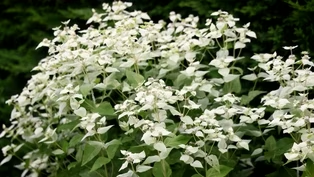
So, we decided, with some help with some friends, to try our first planting, and that was going to be one of the mountain mints, which is called short-toothed or clustered, Pycnanthemum muticum.
Our friend just gave us one plant, and over by the stake in the middle of this large circle is where I planted one plant.
I did nothing else.
I dug a hole in the grass, and I put the mountain mint in.
And now since 2021, in five years, I have a circle that is several meters wide.
I have a beautiful landing spot of the mountain mint for my pollinators.
Right now the flowers are brownish, and I just like the look of that from the house.
You could cut them if you wanted.
We like to watch how it changes from that fall look over winter into the green of spring.
And then later in summer we will see a beautiful pop of white, light green flowers.
So, how would you do something like this?
Well, you could find someone who has this mountain mint, like me, and you could just dig up one little plant.
So, out from the circle because of the way this grows.
I've got some nice well-isolated pieces, and I'm just gonna pop this out of the ground.
And you can see that it's gonna come up with some grass.
But that's okay.
So, we've got the nice stands of Pycnanthemum.
We've got the roots down here.
And it's okay, if you wanna pull the grass out that's fine.
You don't have to, but this piece in a matter of years will give you this kind of coverage.
You don't have to do anything.
We just literally dug the hole and put it right in.
Rosinweed and goldenrods are other good choices, and you can put them against each other and see which native plant wins.
But they will all do well against the grass.
This is a circle because that's how I mow it.
So, I just come up with my mower and make a path.
Now, I do mow around this several times during the year so I have a path so I can walk up and actually see the pollinators.
Otherwise, this would be in the middle of a much larger grassy field that I wouldn't maybe walk through in the summer because of the other insects that I might not want, like the ticks.
So, hopefully this gives you an idea of what you could do to get rid of some of the turfgrass and some of the fescue if you have a spot where you want more native plants.
Happy gardening.
>>Using aggressive native plants that will outcompete the lawn, such as mountain mint and many goldenrods, is a unique way to slowly create a meadow.
It's a great tip, Robyn.
Next, we will visit another type of meadow, one that is much smaller and located in a suburban neighborhood.
I met Becky Winstead in Virginia Beach, where she installed a meadow in an underused portion of her yard and enjoys watching it change from season to season.
Let's take a look.
>>There are so many ecological benefits to a meadow.
I think everybody should have one.
Obviously, it creates biodiversity, not just in plant material, but in the creatures and wildlife that you see.
It supports birds and insects and pollinators.
It works to mitigate flooding.
It stores carbon.
The dense root system prevents erosion.
With sediment filtration, it improves water quality downstream.
The maintenance is so much lower.
You do not have to put any fertilizers.
You don't have to water it.
You don't have to add anything to your soil.
The meadow is designed to fit the site.
And you know, in our area, we basically live in a giant estuary, and we get a lotta rain.
So the flood mitigation and the water quality improvement is especially important to our community.
And it is beneficial for everyone, not just humans.
So meadows are just, I can't think of a negative.
>>The grass did not grow well here.
It's poor soil, or I think it's poor soil, tough to grow anything.
So when I heard that wildflowers grow best in poor soil, 'cause in lush soil, they flop over.
>>Right.
>>I knew that we wanted to plant wildflowers.
>>What a great idea.
>>And that's when we called our friend Jess, who's a landscape architect, and asked her to come up with a seed mix for us.
And we wanted to do perennial that would regrow every year.
And we've just seeded the whole thing, and from there, every year new plants come up.
>>And it's a new kind of surprising.
And look at all- >>Yeah.
>>The plants right here.
I mean, right here, you've got little bluestem coming up, and then you've got columbine.
>>Yes, and we've got blue mistflower that will bloom in the fall, great blue lobelia.
We have a lot of butterflyweed that's now coming out, which is- >>That's so hard to grow.
That's so impressive.
>>Yes, yes.
But that was not by my doing.
It just, we seeded it and it took a couple years to come up, but it's here, so.
>>And you've got beardtongue coming on up.
>>Yep, the columbine, the beardtongue.
And the bee balm, it was here last year, and now, this year, it's just, it'll be a sea of purple.
>>That'll be beautiful.
>>With bees just buzzing.
>>Talk about adding to the ecosystem and supporting the environment.
I mean, this isn't a very large space.
Most people think of multiple acres with a meadow.
But here it is and it's alive and growing.
>>Yes, and we see so many more moths, butterflies, and the birds.
I really think it has increased the number of birds in our yard.
>>Yes.
Well, 'cause you have the insects to increase the food, so in come the birds, yes.
>>Yeah.
>>Yes.
>>It's been a joy.
It's really not been as difficult as I thought it was gonna be.
We don't have weeds like I was afraid of.
It's really taken care of itself.
>>So how did you accomplish all of this?
What steps did you take?
>>First, Jess, she spray painted out the area that we were gonna do.
And so then we scalped it with our lawnmower.
And then we had this big piece of equipment with a power rake attachment.
And it just raked up and really just scruffed up the grass.
>>Kinda chewed it a little?
>>Yeah, chewed it up.
Waited a couple weeks, did it again, and then we did put some grass killer down.
>>Okay.
>>And then after that, we just took our seed mix, mixed it with sand, a lotta sand.
>>Yes.
>>And just broadcast it.
I think we watered a little bit, but really, then it started raining and we did not need to do too much more watering at all.
And after it started to seed, that first summer, we kept it mowed at four inches.
People, I think, thought we were a little crazy.
Like why are we planting this meadow- >>Right.
>>And now we're cutting it?
But really, it was so that the roots could develop and become stronger.
>>Right.
>>And then after that, the next spring, things really started to come up and they started to come up strong.
>>Yes.
>>And we didn't have too many weeds.
It was actually pretty incredible.
>>Well, that's because you cut it four times during the growing season.
You cut those annual weeds off.
They couldn't do anything.
>>I guess that's it.
>>You were controlling those too.
>>Right, they couldn't go to seed and- >>Yeah.
>>Reproduce, so.
>>What a great system.
And it worked.
>>And it worked.
>>Yes.
And it didn't till the soil, so we didn't disturb the soil microbes.
>>No, we did not till the soil.
I can't even imagine that it was such tough, hard soil.
(Peggy laughing) I don't even know that it would've tilled.
>>Thick with all these tree roots that you have.
>>Right, right.
>>That first year as things started to emerge and you started to see all these plants come up, exactly what color and what type of plant were they?
>>Blackeyed Susan came up first.
So I think, you know, the plants had grown enough that first year that the second year, it was just a sea of yellow.
>>Oh.
>>So that's what we had first, and then after that came bee balm and beardtongue, columbine.
And it's just kind of taken over from there.
We've had baptisia in the front now blooming.
It's been something different and new every year.
>>Yes, and I see there's a lot more grasses.
Because meadows need to be 60% grass.
>>Yeah.
>>People don't realize that.
>>And I don't think ours is.
We'll probably try to get more grass in.
That is one thing I would like to get more grass in.
>>Well, through the season, do you do anything?
Do you water it?
Do you fertilize it?
>>We do not do any fertilizing.
I do maybe a little weeding of any like little trees that come up.
Definitely pine trees wanna come up.
>>Yes.
(laughing) >>So, actually, my mom, in the spring, she's here, and that's kinda her job is she goes along (Peggy laughing) and pulls up all the little pine trees.
We do have Virginia creeper that seems to, but it's less and less every year.
And we've had some black cherry trees wanting to grow, and we do have some little oak volunteers, but.
>>From the birds.
>>From the birds, and those are manageable.
>>Yes.
>>But really, I do throw some seed down in spots if it's bare, but it's less and less every single year.
>>And also, that seed, it's not instant.
It's a perennial seed, so it does take two years or so.
>>You have to be patient, but it's so worth it.
The baptisia, this is our fifth spring really, and it is finally blooming.
>>Yes.
>>If it all bloomed all at once, it just wouldn't be as special.
>>No.
>>From year to year.
>>No, no.
And your interest would wane we'll say.
>>I would think so.
>>Yeah.
So this is more exciting.
>>Yeah.
Definitely.
>>So what advice would you share to others who'd like to do the same?
>>Just to go for it.
I don't really think there's anything to lose.
You know, if you only have a 10-by-10 area, try it.
>>Yeah.
>>Try it.
I just think we're so afraid of failure that we stop, we don't even try.
Just give it a good try.
>>Mm-hmm.
Seed will grow.
>>It will grow.
>>Yeah.
>>In really poor soil.
That is what's amazing.
>>Amazing, yes.
Well, Becky, I wanna thank you for having us and sharing your story.
Because we need to do things like this with our lawns.
We need to explore new ways to create our more sustainable and eco-friendly- >>Absolutely.
>>You know, landscapes.
>>We love our big green lawn, but there is room for both.
>>Yes.
>>And I think, even if you have a small green lawn, you have room for both.
>>Yes.
>>It's important.
>>The joy it brings.
>>Oh, it does.
It brings so much joy.
Neighbors love to see what's blooming.
My daughters have learned so much.
It has been a joy.
>>Well, wonderful.
>>What was exciting about this meadow to me is that it's in a residential neighborhood.
It's actually my neighborhood too.
And every little bit helps.
It doesn't have to be this vast expanse.
We live in a suburban neighborhood on medium-sized lots.
You don't have to have acreage to have a meadow.
It can go in the side yard like this one, underneath the trees where you otherwise couldn't grow very much.
And as people walk by, they can enjoy the meadow and see the benefits, and hopefully, become inspired to create a meadow in their yard.
>>Becky and Jess prove a meadow doesn't have to be in full sun.
With the appropriate plant combinations, a meadow can thrive in just about any type of growing conditions, even dry conditions.
And now, Shana, what I'm gonna do is show you how we can increase the plants in our meadow, not just by seed, but also by propagation.
So I've got a few cuttings here from my meadow, and I've got some a situation here where I've actually taken a catering container.
I like to reuse items, just like you do.
>>Yeah.
>>And I put in a mixture of perlite, which actually adds drainage, with vermiculite- >>Okay.
>>Which actually absorbs, you know, moisture.
So it's a combination that can very well drain but also hold a tremendous amount of moisture.
>>It looks light and fluffy too.
>>It is, it's great for even seedlings too, okay?
But then, of course, my next step is to sterilize my clippers, so which I sprayed with, you know, isopropyl rubbing alcohol.
And then I sharpened them, of course, 'cause you know me, I like sharp tools.
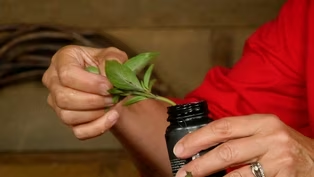
(laughing) What I've done, though, is already gone out to my meadow, and I've got some hummingbird mint here that I'd like to show you.
And if you look at the stem of this plant, you can see where there's actually sections where you've got growth, and then you have what's called the node where the leaf comes out.
And we have known for a very long time that in that node are hormones within that leaf that can actually cause the cells to differentiate from shoots to roots.
>>Okay.
>>And we're gonna promote roots, all right?
>>All right then, yeah.
>>And we always wanna make sure we have at least three nodes to propagate with, all right?
>>Okay.
>>So what I'm gonna do is I'm not gonna cut down here.
I'm gonna be cutting up here, because I want that node there.
So I'm gonna make a nice angled cut as always.
And I'm not going to rip these leaves off.
I'm gonna pinch 'em off, because I don't wanna damage any part of that stem.
>>All right.
>>Okay?
Now, many people like to use a powdered hormone.
I like to use a liquid hormone.
This one here, I've had great success with a liquid hormone.
And so it's a rooting hormone that I dip into.
>>Okay, you get it really good on there, huh?
>>I get it really good in there, yep.
You can see it's kinda purple.
I actually like that so you can see it.
>>Mm-hmm.
>>And then I put my little finger in, very high-tech.
(Shana laughing) And I know that I've got it on that node there really well, and I put it into the soil.
Okay, and I tamp it in there like anything else we do.
All right?
>>It looks good.
>>Yeah, and I don't know about you, but I like to baby my plants with water.
>>Yeah, mist them a little bit.
>>Mist 'em a little bit.
Now, mind you, I would have this whole section filled, and then I'll put the lid on.
>>And we're gonna make sure that you label everything too, because sometimes, we forget what we stick in there.
>>Absolutely, so I wrote meadow plants on here so I didn't have to list the whole entire, you know, variety of plants that we're gonna have in here.
But yeah, you can see here that I've actually taken the lid and put some holes in it, 'cause I want a little bit of drainage.
I don't want this to become a super moist environment.
I want it to just stay a little bit moist.
>>Mm-hmm.
>>Because I don't want rot to come in, which is why I used vermiculite and why I used the perlite, because those are sterile.
So I know that I won't have any rot coming in.
And then I will take this outside and I'll put it in a shady spot for about four to six weeks.
And I'll check on it every now and then and mist it where I need, you know, when needed.
I'll check to make sure that it stays moist.
And usually within four to six weeks, I've got some rooted cuttings.
>>That's exciting.
I wanna try that at home.
>>It's so easy.
You can use any size.
This is a large container.
I've done 'em in just tiny little containers too.
>>But I see so many plants that I really want, and I don't wanna start from seeds.
So that's great.
>>Yes.
It is great.
Now, my next step, oh I forgot to mention, I do have a few drainage holes at the bottom.
I just took a knife and made some slits.
I'm sorry, I forgot that part.
But yes, you should try it at home, 'cause it's so easy.
>>And I see you have it inside of a pan.
So you can actually just put water in the bottom and it'll suck it up.
>>Mm-hmm, to some degree, yes.
>>Okay.
>>If I've got good, you know, contact down underneath there, yes.
>>Okay.
>>But my next step is, let's pretend that this has rooted, okay, and I'm gonna go out and plant it.
Well, I don't know about you, but I've got squirrels too.
(laughing) >>(laughing) I got some.
>>And I have voles and I have moles and I have every, and I have deer.
So what I have done and do is I use this.
This is actually a hanging basket frame.
>>Oh.
>>That you would normally fill with a liner of moss, of whatever, or whatever you wanna choose, a coir liner, and I use it as my- >>Oh yes, so clever.
>>Wildlife protection.
Yes, I use this on containers that I newly planted.
I use this in areas where I've planted small plants right into the ground, such as my newly rooted plants.
Because I wanna protect them from curious squirrels, and I don't want anybody coming behind me and digging 'em up and ruining my hard work.
(laughing) >>Oh, I've seen that happen too many times, yes.
>>Way too many.
>>This is smart.
>>Yes, thank you.
And as you know, I like to shade transplants, so I can easily put a kind of soft fabric over this and create a little shade to actually reduce the intensity of the sun on a transplant as well.
It's got 110 uses.
>>Clever idea, I like it.
>>I'm glad and I hope you can use this method to propagate some of the plants in your garden.
>>I'm definitely going to use it.
>>And now, we're going back to Jess Nelson in Virginia Beach to answer questions regarding suburban meadows.
Remember, you can send us your questions anytime at vpm.org/vhg or on Facebook.
We always enjoy hearing from you.
>>So Jess, with our first question and the meadow right behind us, you know, it's a beautiful space, but are there any maintenance challenges to a meadow?
>>Well, of course, there are always maintenance challenges when you're talking about gardening and nature because there is a natural succession.
Nothing is ever stagnant.
Gardens are always susceptible to time and elements.
So, I would say the largest challenge for a meadow is to combat the natural succession.
Generally speaking, if land is disturbed, it is the perennials that would come up first.
They would send down taproots, bring up moisture and nutrients.
They're the ones that would... that would make the soil viable, aerated with their roots.
So then other things can grow more easily.
So, the perennials come up, and then, of course, the birds, and they would come and they would deposit seeds, and you would have shrubs, and then it would turn into a grassland shrubland.
And then eventually the last in the succession is a full forest.
>>Yes.
>>So, you know, we don't want a meadow to become a forest, so when we see woody things like shrubs and trees, you would have to go in there and pull those out.
>>Yeah.
And if you do so in the wintertime when the soil is moist, it's very easy.
>>Yes.
>>It's not at all difficult.
If you try to do it in August, it's another chore completely.
But yeah.
So, there are timing for it.
And speaking of winter, does a meadow here need anything to prepare for overwintering?
>>Not necessarily.
You really just allow the meadow to do its thing.
However, there is new research from NC State that says, we probably we should cut the meadow to about 12 to 18 inches, leaving the stalks that pulp in the center will... >>Break down.
>>Will break down.
>>Yeah.
>>And then, the hollow stems provide habitat for native bees.
>>Yes.
>>So it's good to cut the meadow, they're finding, earlier than we used to think.
So, early winter.
>>Yeah.
Isn't that great research?
I love hearing new things.
You know, it just tells us we're all evolving and learning.
>>Yeah.
Always.
I mean, that's a garden for you.
It's a giant experiment.
>>Yes.
>>You just never want to be afraid to try.
>>Okay, Jess, here's a question from Lynda.
And she says, "There are all sorts of seed packets that say you can just scatter them and your yard will grow into a flower meadow/garden.
This, given my various attempts, is poppycock.
How do you get your future meadow to bloom?"
>>Well, first you have to get your seed from a reputable dealer.
You have to make sure the seeds are appropriate for your area.
And... >>You have to spread them properly.
>>Oh.
And you have to look at the different seeds.
Seeds are all different.
You have some that are fluffy, you have some that are small, you have some that are larger.
So you have to look at the type of seeds.
And sometimes you broadcast them at different times.
You might have to do the small ones together, the big ones together, the fluffy ones together.
And you also want to mix sand or some sort of aggregate with the seeds.
You don't just throw the seeds down.
>>Right.
It's not like putting out grass seed on a lawn.
Are there any reasons to water a meadow?
>>No.
That is the beauty of a meadow.
And that's why it's one of the reasons why it's such a resilient habitat, a resilient part of a garden, is you don't have to fertilize it, you don't have to water it.
It kind of fends for itself.
It has all these different plants, so if we have a year that's drought, then the plants that tolerate drought are going to be more prolific.
And if we have a year that there's more moisture, then the plants that tolerate that are going to be in a greater abundance.
>>Truly.
>>So, it really kind of goes with the flow of mother nature.
>>Yes.
And I know from my experience, there's times I've looked at my meadow and went, "Oh, I want to water that so bad."
And I haven't, because the roots are deep, as you mentioned, and they are resilient.
We just have to bide our time.
>>And it's true, because Becky and Barden asked me one time, "Should we water this meadow?"
I said, "No."
>>Yes.
>>I do believe it was watered right after the seeds went down.
But I think that was more for setting the seeds.
They did that with a sod roller to get that good soil to seed contact to promote germination.
But I don't think it's been watered since.
>>Well, another one is, "Any advice to help with neighbors that think this might look, quote/unquote, messy?
It's not tight and tidy."
>>I mean, that is always a challenge.
>>Yeah.
>>Everybody has their ideas of what is appropriate.
I think that you could always have a defense in the back that you're supporting not just you and you're not trying to create just a beautiful space, but you're supporting pollinators, which are in decline.
I mean, they need all the help they can get.
Moths, butterflies, bees, birds.
Who doesn't like birds?
>>Really.
They'll listen to the joy they bring us with just their song.
>>I know.
>>Yes.
>>And you could also say that they, all of these creatures that we're bringing into our garden fight things like mosquitoes.
>>Yes.
>>And ticks.
>>Yes.
Yes.
Don't get me started on the sprays.
So, they hurt our pollinators too.
People don't realize that.
But I also think we need to start looking at our yards as part of the environment.
We're starting to reduce the lawn, not eliminate it, just reduce the lawn.
And we're starting to make room for our yards being more sustainable.
>>Absolutely.
And the more people we can get to provide these habitats, it starts to create trails.
So there's not pockets, they become one unified space that all of these pollinators and all these little creatures can meander through an entire neighborhood without any disruption.
>>Yes.
Without being concerned about the hawk overhead, yeah, truly.
But also to have a sustainable environment that they can actually diversify themselves.
Meaning, with their generations.
They're not limited to a small space, they're able to really be able to expand their generation so we can really repopulate what needs to be.
>>Absolutely.
>>Yeah.
I've got another one here.
"Are you in favor of soil testing for the meadow?"
>>Yes, we tested for this.
I think that it's important to know what you're dealing with.
Because you don't want to modify the soil, you want to make sure that the plants are the right plants for the soil that you have.
>>Right.
>>So, we did that.
We didn't modify it.
But the soil testing gives you information that you need to choose the right plant species.
>>Correct.
Because some people don't realize there are plant species that really prefer more alkaline or sweet soil versus some that really prefer the more acidic soil.
>>Absolutely.
>>And the last question I want to ask you is from Terry, and it is, "Do you want to keep any of the trees or woody plants that come into your meadow?"
>>I mean, I think that depends on the goals you're trying to achieve.
My answer for that, if it were my meadow, is yes, I would consider keeping some.
If there are native trees and plants that are coming up in areas that could provide benefit, I would leave them.
I mean, we can edit the meadow in a way that achieves the goals we're trying to achieve, you know, to reach the goals we're trying to achieve.
>>In my meadow, I also am able to use that sort of as a barometer of my neighbor's plants to see what plants are being introduced, seeded by the birds, that are not native, that are actually invasive.
And it's opened my eyes to have an area where I can almost, you know, have it be a little test plot of really what's out there and how things are moved around.
So knowing what's native and what's non-native is very important, just because it pops up in your meadow.
>>Absolutely.
>>Doesn't mean you want to keep it.
>>That's true.
>>Yeah.
So a little bit of education, which is what we're all about.
>>Absolutely.
>>Jess, thank you so much for spending time with us today.
And thank you for your guidance in this meadow for Becky.
>>Oh, it was my pleasure.
>>Absolutely beautiful.
>>Thank you.
(eager music) >>Meadows are not only beautiful but functional for the environment.
But just what if you don't have the sunny location for all of the wildflowers and grasses that you have grown to love?
Well, consider doing a shade planting where you can have a meadow feel.
Using a mix of different Carexes and shade-loving wildflowers, you can create a meadow effect in a woodland garden.
So today I'm going to be planting this small section of my garden with different Carex and our native bleeding heart.
Now, remember, all of these are shade and part shade-loving plants, so you can create that meadow effect using shade plants.
I'm going to start here with this Carex, planting this along the border.
And I do have, which I forgot to mention, some blue-eyed grass here, which is a nice little grassy-looking plant.
Beautiful blue flowers.
But this Carex, going to get this in the ground.
Now, if we are having this dry weather, I suggest just pre watering the section that you're going to be planting, makes it a lot easier to get things in the ground.
And I think the plants will be a lot happier too.
So I've got this out of the pot, got my hole pretty well dug here.
I'm going to make sure that the roots are loose because you don't want them to continue to grow into a circular pattern.
And they'll actually grow out into the existing soil.
And we'll get this in, and just remember, when planting container plants, try to get it about the same level as it is in the container.
So your soil level will be about the same level.
We'll get this tucked in here.
I'm going to give it a little push.
And... it's in this new home.
I can move along with a different plant here.
This is the bleeding heart.
Beautiful blue-green foliage.
Pink heart-shaped blooms.
And I hope it'll be very happy in this spot.
Get this hole dug.
See, pre-watering the soil actually made this a lot easier.
(bird chirping) And again, we'll get it out of its container.
Roots are not too badly entangled, but I'm going to just loosen this up a little bit.
And then let's see if I can get this in its spot.
Again, checking ground level.
This one is a little high, but I think it will be okay.
We'll press that in.
And then this will be a good start to this woodland meadow garden.
Further along this trail, I have lined it with mushroom-infused logs, and I want to use a mix of different wildflowers to add to that too, along with some ferns.
So further down, there's going to be some ferns, and again, the blue-eyed grass to add to this garden.
So if you like meadows but you don't have a sunny location, just choose some native wildflowers that like shady locations and add in some grass-type plants.
So I hope everybody would get their hands dirty and get out and plant your woodland meadow.
>>Meadows might not be a choice for all of us, but each of us can add native plants to our garden.
So that's a good point, Serome.
We have learned that success of a meadow is not related to its size, each is a sanctuary for birds and wildlife, and it reduces the lawn.
It requires minimal maintenance while filtering water and also benefiting the soil biome.
So Shana, what is your experiences with meadows?
Do you have one or something similar?
>>Actually, I have one that's probably about a 4 by 4 area.
>>Okay.
>>Because I took some seeds, native plant seeds, and I just grew them all varieties.
And then I've been trying to transplant them in other places in the yard.
>>Right.
>>But I really liked your, your clippings that you did.
That saves me a lot more time.
>>It does.
And it saves people a lot of money because many of us already have the plants, we just need to add more to our meadows.
>>Yeah.
So on the whole side border of my house, I see that, I think we mentioned something earlier, one of the episodes of... of mountain mint.
So I have mountain mint starting to grow, and then a lot of other native plants that are starting to come in.
And I'm seeing more birds and stuff, so hence the bird houses and stuff.
>>You know, plant it and they come.
It's absolutely amazing.
You know, I've got a meadow too at my place, and the number of birds that have, I say, reentered into my ecosystem there, my little environment, has just been amazing too.
>>But it's not just the birds.
Like I sat out there and I also saw some possums and stuff, and I'm in a city.
And I love being able to be in the city and see so much nature, and to hear it, and it's so peaceful.
>>It is.
And, you know, it just connects with our interior and really just makes us relax and feel good.
>>It really does.
So, like I said, I'm going to start taking some clippings of some of the different things that I like.
And then from that point, do your process, and then I can share that at the farm with a lot of other people who want wildflowers.
>>And Shana, thank you for sharing all that good information on protecting birds and bird houses.
That's invaluable.
>>You are very welcome.
And thanks to all of our guests today.
And thank you for watching.
Remember that you can stay connected with me and the team by signing up for our monthly newsletter on our website, vpm.org/vhg.
Next month, we're learning about unique crops for the vegetable garden, traditional to India and West Africa, that thrive in tropical monsoonal weather, but also grow in Virginia.
Send us your vegetable questions using our website or through Facebook.
We also welcome other gardening questions anytime.
And while you're on Facebook, check out a new Baking in Bloom tip from Chris Martin.
I look forward to being with you again soon.
And until then, remember, gardening is for everyone, and we are all growing and learning together.
Happy Gardening.
>>Production funding for Virginia Home Grown is made possible by: Strange's Florists, Greenhouses, and Garden Centers, serving Richmond for over 90 years with two florists shops, two greenhouses, and a garden center, located throughout the metro Richmond area.
Strange's, every bloomin' time.
And by Sally R. Youngs.
In honor of the Grateful Deadheaders resident interest group.
And by: (birds chirping) (easygoing music) (easygoing music continues) (easygoing music continues) (easygoing music continues) (easygoing music ends) (thoughtful music)
 New
NewVideo has Closed Captions
Clip: S26 Ep3 | 7m 45s | Tour the meadow at Barboursville Vineyards (7m 45s)
 New
NewVideo has Closed Captions
Clip: S26 Ep3 | 5m 9s | Get DIY tips for birdhouses (5m 9s)
 New
NewVideo has Closed Captions
Clip: S26 Ep3 | 3m 32s | Start a meadow with just one plant (3m 32s)
 New
NewVideo has Closed Captions
Clip: S26 Ep3 | 5m 6s | Learn how to grow new plants from cuttings (5m 6s)
 New
NewVideo has Closed Captions
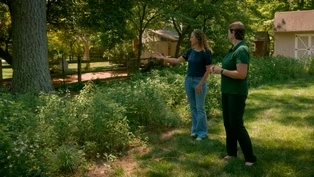
Clip: S26 Ep3 | 7m 52s | Discover how small meadows make big impacts (7m 52s)
 New
NewVideo has Closed Captions
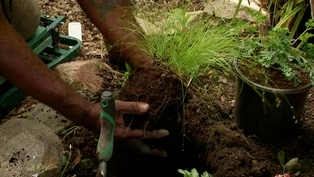
Clip: S26 Ep3 | 3m 56s | Discover grasses and flowering plants that flourish in shade (3m 56s)
Providing Support for PBS.org
Learn Moreabout PBS online sponsorship














Support for PBS provided by:
Virginia Home Grown is a local public television program presented by VPM